EN

Hot Stamping Foil on UV-Varnished Cartons: What Buyers Should Check
2026/10/28
Gold foil can be stamped on selected UV-varnished cartons, but the surface and foil must match. Learn what to check before approving a finished box.
2026/09/22
2026/09/22
Premium packaging has a fraction of a second to signal value. Holographic foil wins that moment through diffraction, not glitter. A hologram is a microscopic interference pattern embossed into a foil or film. Holographic printing carries that pattern onto the label as a transferred foil layer, so the effect lives in the surface rather than in the ink. White light hits the pattern, bends into spectral colors, and shifts as the viewing angle changes. That angular color movement creates depth and motion on an otherwise flat label. For high-end product labeling, the effect does practical work. It gives a pack a visual weight that printed ink cannot match, and it does so without a new board grade, without a separate finishing pass, and without a measurable change to package weight or dimensions. The appeal is optical, but the commercial value is psychological. The label reads as harder to fake, more deliberate, and more expensive before any copy is read.
Counterfeiting remains a serious tax on premium brands. A 2021 OECD and EUIPO report estimated that trade in counterfeit and pirated goods amounted to up to 2.5% of world trade in 2019. Holographic labels do not stop every copy, but they raise the technical bar. Master origination, which belongs to the stage upstream of foil conversion, often uses electron beam lithography or precision laser interference. That equipment is costly and demands deep process knowledge. A desktop printer cannot reproduce the angular color shift, the micro-text, or the registered security pattern. Brand protection teams often pair holographic hot stamping foils with one-item-one-code marks carrying micro-text encryption and with covert security features that need a reader, a combination that leaves a visible check on the pack and a hidden one behind it. The hologram becomes a quick visual check. If the color shift looks flat under a phone light, the package is suspect. That tool-free verification is why anti-counterfeiting registered stamping remains a core option for high-value labels.
Making a holographic foil that performs across a long run is harder than selling one. The embossing tool must hold fine detail through thousands of impressions. Release layers must debond cleanly. The lacquer that carries the diffraction grating must transfer without haze or micro-scratches.
Release behavior is specified as a window rather than as a single value, so the release layer has to debond at the same point on the first meter of a roll and on the last. Coating weight, resin viscosity and cure state are held to a tolerance across the full length of the roll, and drift in that tolerance shows up as a change in transfer behavior late in a long run. Temperature, tension and dwell time on the press then decide whether the specified window is met on a given job. Haze and micro-scratches are the visible end of the same chain, and they usually trace back to release or lacquer formulation rather than to the press. Reliable holographic output therefore depends on a supplier that controls coating, embossing and inspection, not just on trading rolls.
The table below compares common label options in qualitative terms. It is based on general foil converting behavior, not a single production trial.
|
Attribute |
Holographic label |
Standard metallized label |
High-opacity printed label |
|
Visual depth and motion |
High, angular color shift |
Moderate, static metallic |
Low, flat appearance |
|
Counterfeit resistance |
Very high, complex origination |
Low to moderate |
Low |
|
Long-run stamping consistency |
Needs tight tension and temperature control |
More forgiving |
Very forgiving |
|
Relative cost at scale |
Higher than printed, close to premium metallized |
Moderate |
Low |
|
Typical fit |
Luxury spirits, cosmetics, anti-counterfeiting |
Mid-tier consumer goods |
Mass-market FMCG |
Holographic foil is not a universal upgrade. It is a targeted tool for products where brand equity and authenticity justify the extra process control.
Holographic printing makes sense when the label is part of the product experience. Limited-edition spirits, high-end fragrance, anti-counterfeiting registered seals, and premium cosmetic packs are strong fits.
Visual differentiation is the part a holographic foil can deliver deterministically, because the angular color shift comes from the optical structure rather than from ink density, so it survives the move from screen to shelf. Whether that differentiation converts into a sales effect depends on category, price point, shelf context and the rest of the pack design, and it is not a figure a foil supplier can quote. The defensible promise is narrower: a defined optical effect, held consistently across the run, on the substrate the brand actually uses.
Holographic printing is not free of limits. Thin constructions and heat-sensitive films set their own constraints, because the foil has to run at line speed without losing registration or transfer continuity. Rough or highly textured substrates can distort the diffraction pattern. For purely functional labels, such as shipping cartons, the cost premium rarely delivers a meaningful return.
A holographic portfolio spans registered hot stamping, offset and flexo cold foil, screen and digital routes, and it extends to transparent, overprintable, halogen-free, foil-on-foil, cat-eye registered and custom registered constructions, so one optical design can be carried across several pack formats without re-originating the pattern. That range is what allows the effect to be reserved for hero SKUs and security-critical labels rather than applied as a blanket upgrade.
The difference between a foil that delights and one that disappoints usually sits in coating chemistry. The release layer must be engineered to debond at a specific temperature without residue. The lacquer holding the embossed pattern needs the right glass transition temperature to lock the grating while still allowing clean transfer. Small formulation errors cause blocking, haze, or scattered light.
Certifications such as ISO 9001, ISO 14001 and ISO 45001 set the management baseline, but they do not define the process window for holographic performance. That window is found in the coating lab and on the press floor, by documenting how humidity, resin viscosity, and roll tension affect transfer. Halogen-free constructions are specified for brands whose material rules restrict halogen content, and the coating system is selected against those same rules. A supplier with deep coating research and strict inspection can hold those variables in check.
GL Foils has manufactured stamping foils since 2008, with in-house R&D, testing and inspection centers and a focus on fundamental coating research. Its holographic range covers hot stamping, offset and flexo cold foil, screen and digital routes, together with transparent, overprintable, halogen-free, cat-eye registered and custom registered constructions, so a holographic effect can be matched to the substrate and the converting route from a single source.
2026/10/28
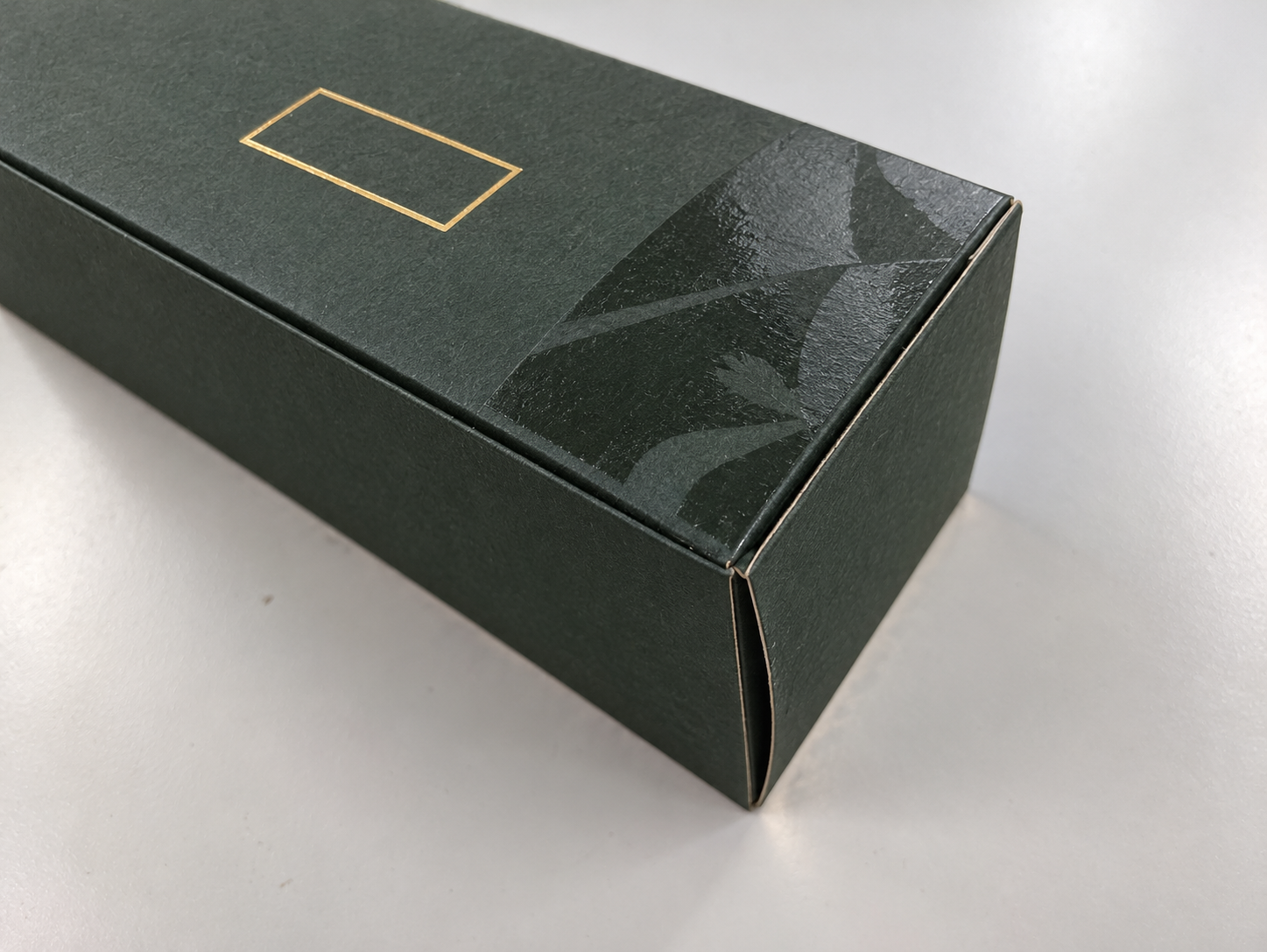
Gold foil can be stamped on selected UV-varnished cartons, but the surface and foil must match. Learn what to check before approving a finished box.

2026/10/26
Gold foil can look perfect on a flat carton and crack after folding. See what to check in the artwork, board, crease and finished sample.
2026/10/27
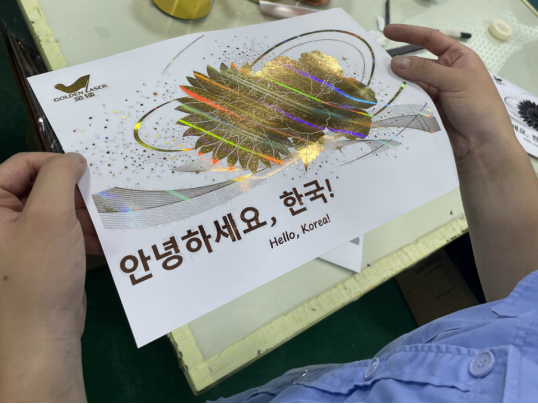
Hot stamping foil delivers metallic and holographic decoration for packaging, with reliable release, adhesion, and press performance.
2026/10/26
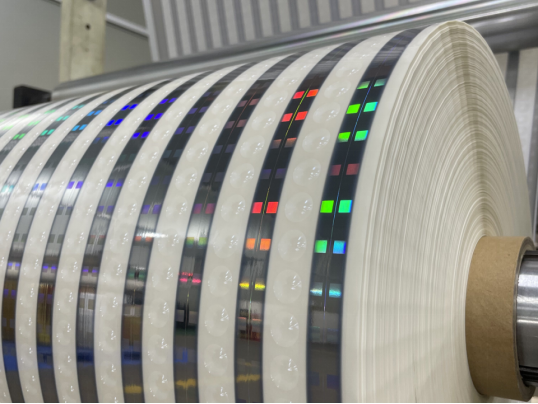
Holographic foil and hologram technology add layered authentication to packaging, supporting brand protection with verifiable optical security.

2026/10/23
Holographic foil and hot stamping elevate packaging perceived value with consistent optical effects for premium cartons.
2026/10/22
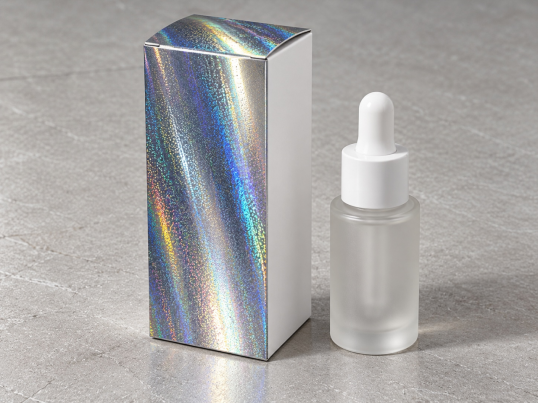
Holographic paper for cosmetic cartons adds light-shifting effects, foil stamping performance, and premium shelf appeal for beauty packaging.