EN

Hot Stamping Foil on UV-Varnished Cartons: What Buyers Should Check
2026/10/28
Gold foil can be stamped on selected UV-varnished cartons, but the surface and foil must match. Learn what to check before approving a finished box.
2026/09/23
2026/09/23
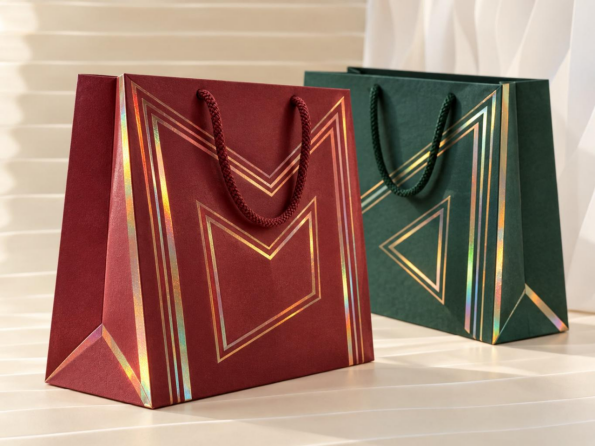
Luxury shopping bags rarely stay still. They swing from a wrist, rest on a cafe chair, and get photographed on a sidewalk. That movement is where holographic foil earns attention. A matte bag can look refined under store lighting, but a holographic surface changes character with every shift in angle. The color shift is not random glitter. It comes from an engineered optical structure that turns the bag into a small moving sign.
For luxury retail, that motion matters. A shopper walking through a mall becomes a carrier of the brand's visual identity. A controlled shift from silver to blue to pink can signal premium positioning before anyone reads the name. That is one reason holographic foil has moved from gift wrap onto higher-end shopping bags.
Holographic foil for paper and paperboard carries the optical structure onto the bag as a transferred layer, so the effect belongs to the foil specification rather than to the board grade.
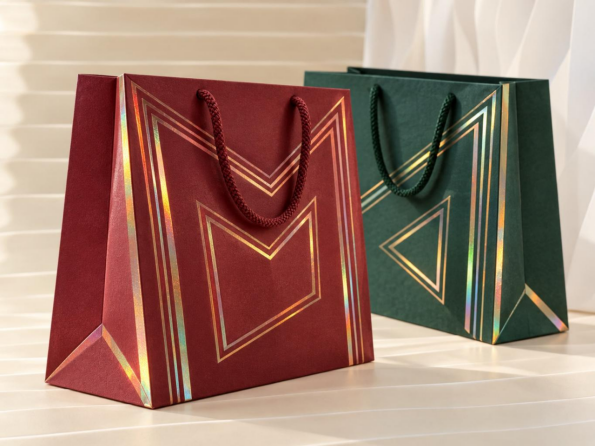
The effect starts with microstructure, not pigment. The foil carries a microscopically fine embossed pattern, a diffraction grating, held in a lacquer layer over a vacuum-metallized aluminum layer. That stack transfers onto the paper or board under heat, pressure and dwell, and the carrier film is pulled away. White light striking that relief is split into separate wavelengths, so the color reaching the eye changes with the viewing angle.
Not all holographic constructions behave the same. A bright silver base under a broad rainbow pattern gives the widest angular travel. A transparent holographic grade lets printed brand colors stay visible underneath. Fine-detail and patterned grades hold tighter graphics, overprintable grades accept ink on top, and halogen-free grades are specified where material restrictions apply. The same optical design is available across hot stamping foils for paper and paperboard, sheet-fed offset and flexo cold foil, screen and digital routes, so a pattern approved on one line can be carried to another without re-originating it.
The quality difference often shows up in the coating. A poorly formulated coating can look bright in a sample book but turn hazy after glue application or folding. A well-designed coating keeps diffraction crisp while staying flexible enough for creases.
Luxury brands buy packaging for more than protection. They buy a few seconds of perceived value. Carrier bags sit inside a wider group of paper and paperboard packaging, and the foil grades specified for cartons, labels and rigid boxes are the same ones used on them. Holographic foil supports the goal in three practical ways.
It creates shelf disruption. Where surrounding bags rely on a matte or uncoated finish, a controlled holographic flash separates the brand without louder graphics.
It supports storytelling. Limited editions and seasonal collections can use a specific rainbow direction to match a campaign.
It adds visual complexity that is difficult to copy with ordinary CMYK printing.
The reason is structural rather than statistical. A holographic layer carries its effect in a physical relief pattern rather than in ink density, so the color shift survives lamination, folding and handling in a way that a printed metallic cannot. Whether that translates into a commercial result still depends on category, price point and the rest of the pack design, and it is not a figure a foil supplier can quote.
A holographic foil is a layered construction rather than a coating. A polyester carrier film supports the stack during handling. A release layer lets the foil separate cleanly from the carrier. A lacquer layer receives the embossed diffraction grating and protects it after transfer. A vacuum-metallized aluminum layer supplies the reflectivity that makes the diffraction visible. A size coat bonds the whole stack to the substrate.
Folding loads the stack in a way flat stamping never does. On a scored and folded board, the transferred layer has to stretch across the crease without fracturing, so elongation becomes the limiting property rather than brightness. A foil formulated for flat carton work can micro-crack on a crease that a bag line produces every cycle. Coated boards release the foil more cleanly than uncoated kraft, and board stiffness, adhesive chemistry, scoring depth, humidity and press speed all shift the result in the same way.
The failure modes read differently, which is what makes them worth separating at the specification stage. A crack along the crease points to limited elongation against too deep a score. Haze after glue application points to the lacquer or release formulation. Patchy coverage points to uneven adhesive laydown or nip contact. Each one is traceable to a different variable, so testing the finished bag rather than the flat sheet is the only check that captures all of them.
Holographic foil can lift a shopping bag from ordinary to memorable, but it comes with trade-offs. Cost sits above standard metallized paper, set by pattern complexity and coating build. Recyclability depends on the substrate, the coating build and the local paper stream. Folding needs tighter process control than a plain coated board.
|
Property
|
Traditional metallized film laminate
|
Holographic transfer paper
|
Vacuum metallized paper
|
|
Visual depth
|
Medium, uniform metallic
|
High, angle-dependent rainbow
|
Medium, silver or colored metallic
|
|
Crease tolerance
|
Low to medium
|
Medium to high with correct coating
|
Medium
|
|
Recyclability
|
Lower due to film layer
|
Depends on substrate and coating
|
Moderate
|
|
Anti-counterfeit potential
|
Low
|
High with custom hologram
|
Medium
|
|
Relative cost
|
Baseline
|
Higher, set by pattern complexity and coating build
|
Moderate
|
The table is not a ranking. It is a starting point for specification talks.
How to Specify Holographic Paper Without Regret
The most reliable path is to test the full bag, not just the sheet. A supplier sample under office light tells very little about how the material behaves after printing, gluing, and folding.
Practical checks include scoring at production speed, inspecting crease lines under low-angle light, checking adhesion of the transferred layer with a cross-hatch tape test such as ASTM D3359, and rub testing the finished surface with a weighted pad. Alcohol resistance belongs to that second check rather than to the tape pull, because solvent wipe walking across the surface loads the layer in a different way than a cross-hatch grid does.
For brands comparing suppliers, GL Foils has built its reputation around coating research, process control, and export-ready supply support. Its holographic range covers hot stamping foils for paper and paperboard as well as offset, flexo, screen and digital routes, so holographic paper can be matched to the board grade and the converting line from a single source.
2026/10/28
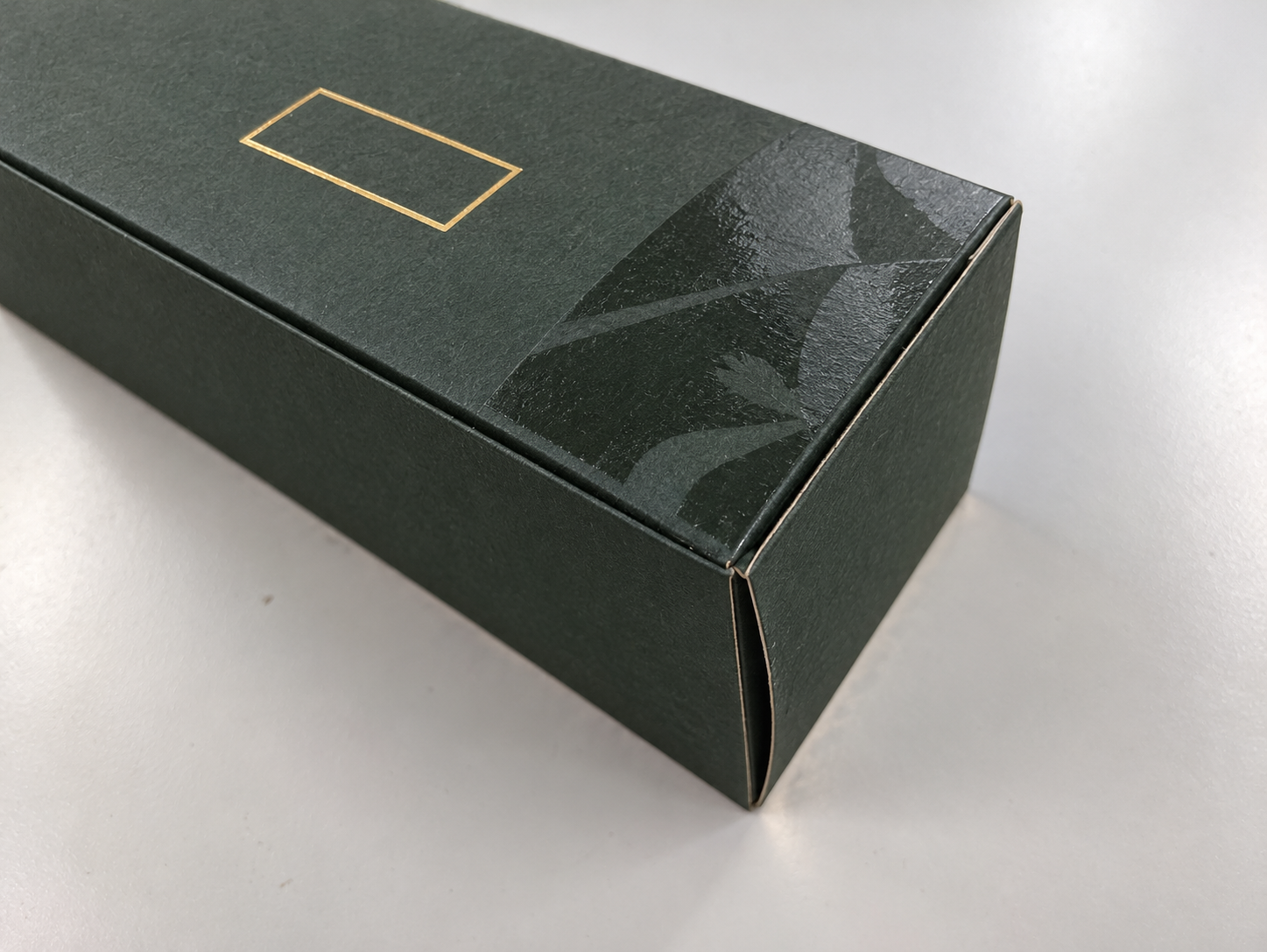
Gold foil can be stamped on selected UV-varnished cartons, but the surface and foil must match. Learn what to check before approving a finished box.
2026/10/26
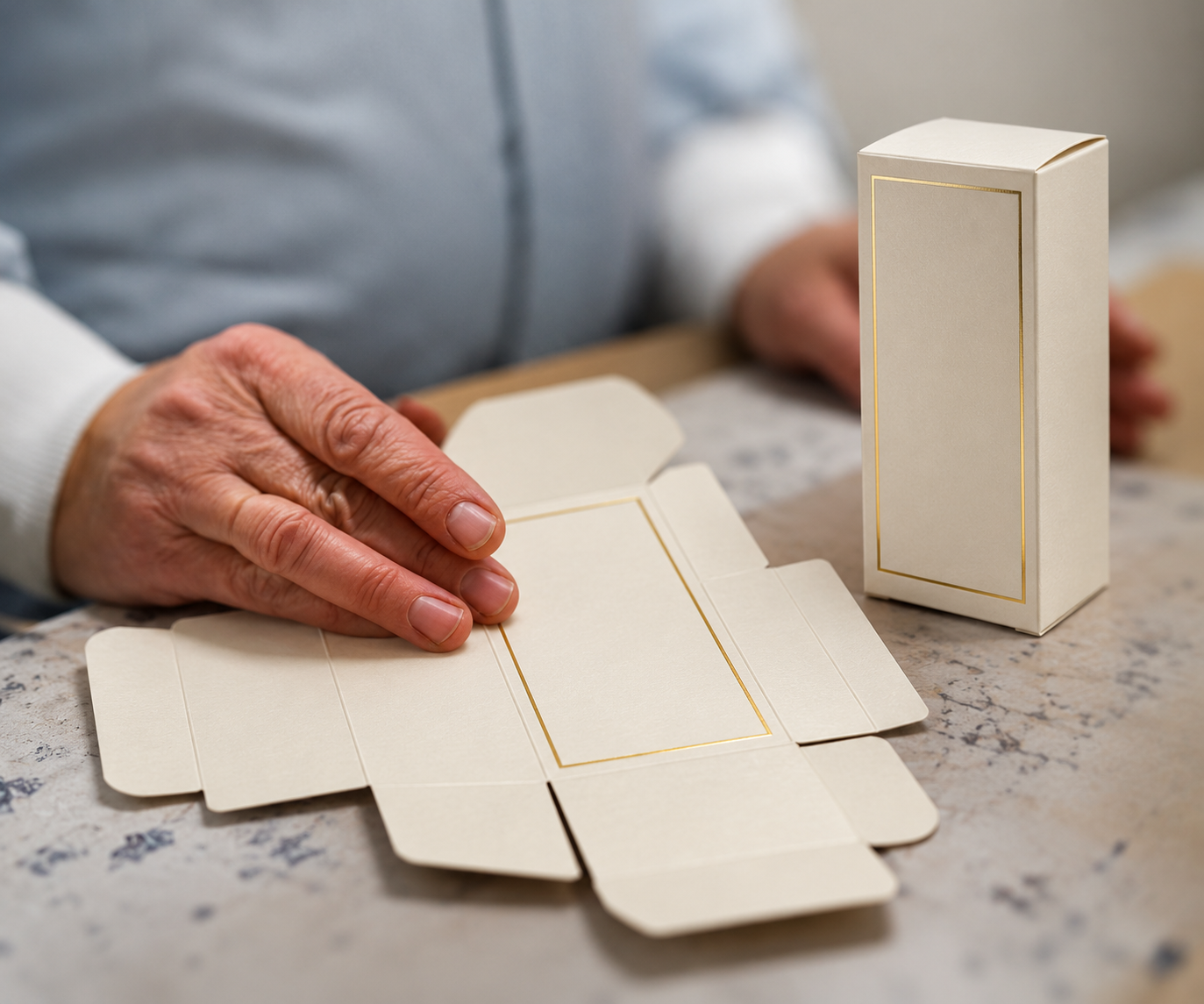
Gold foil can look perfect on a flat carton and crack after folding. See what to check in the artwork, board, crease and finished sample.
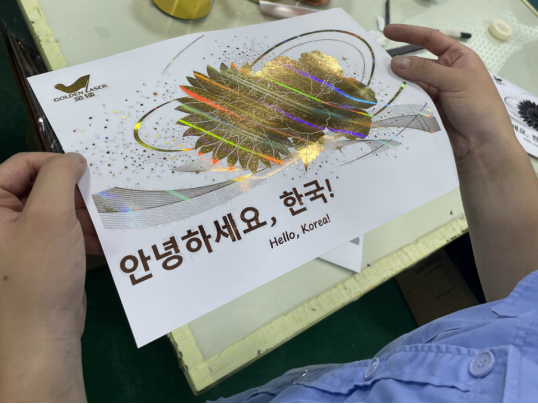
2026/10/27
Hot stamping foil delivers metallic and holographic decoration for packaging, with reliable release, adhesion, and press performance.
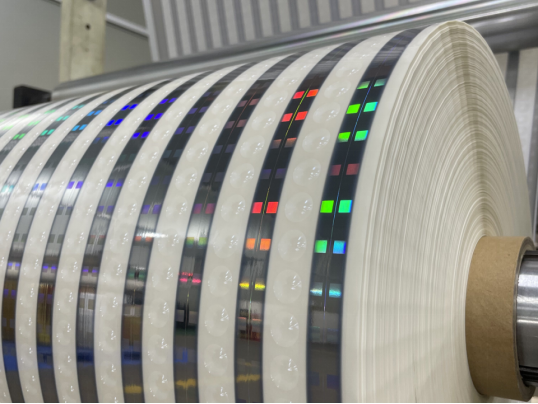
2026/10/26
Holographic foil and hologram technology add layered authentication to packaging, supporting brand protection with verifiable optical security.
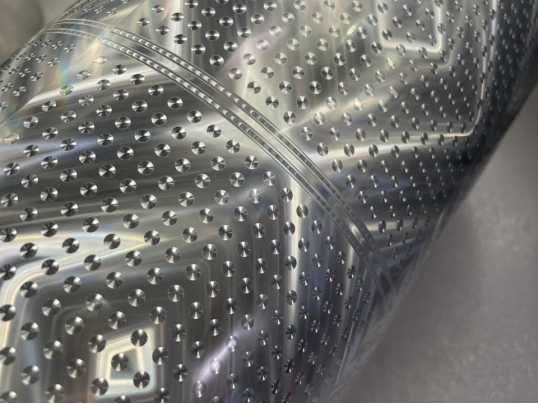
2026/10/23
Holographic foil and hot stamping elevate packaging perceived value with consistent optical effects for premium cartons.
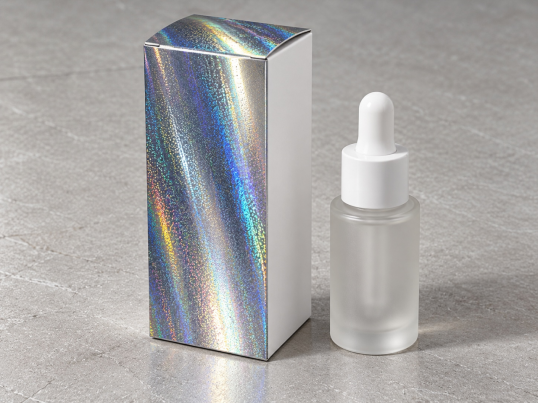
2026/10/22
Holographic paper for cosmetic cartons adds light-shifting effects, foil stamping performance, and premium shelf appeal for beauty packaging.