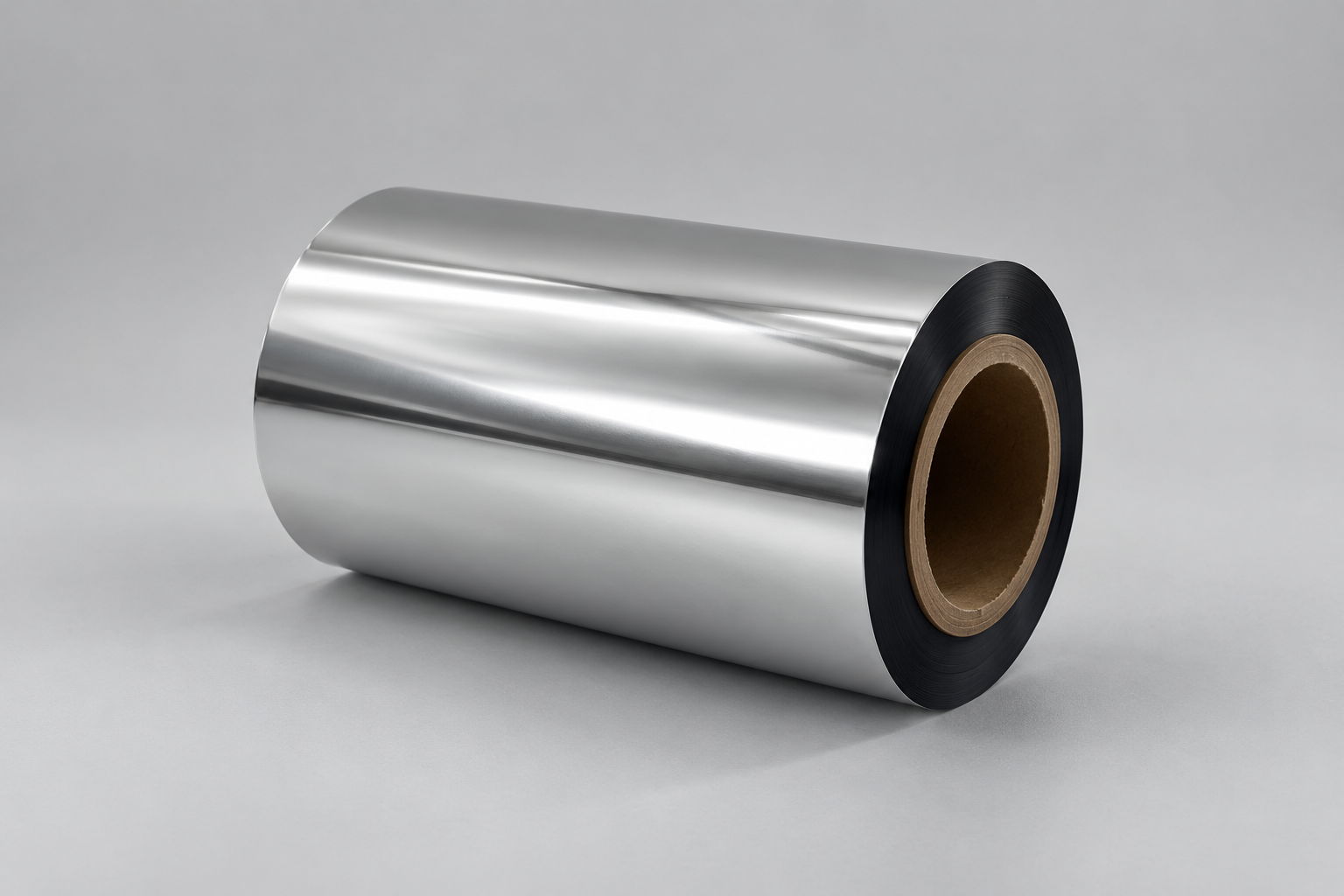
Bright silver cold foil for narrow-web label converters. Add clean metallic accents to beverage, personal-care and other pressure-sensitive labels without a heated stamping die.
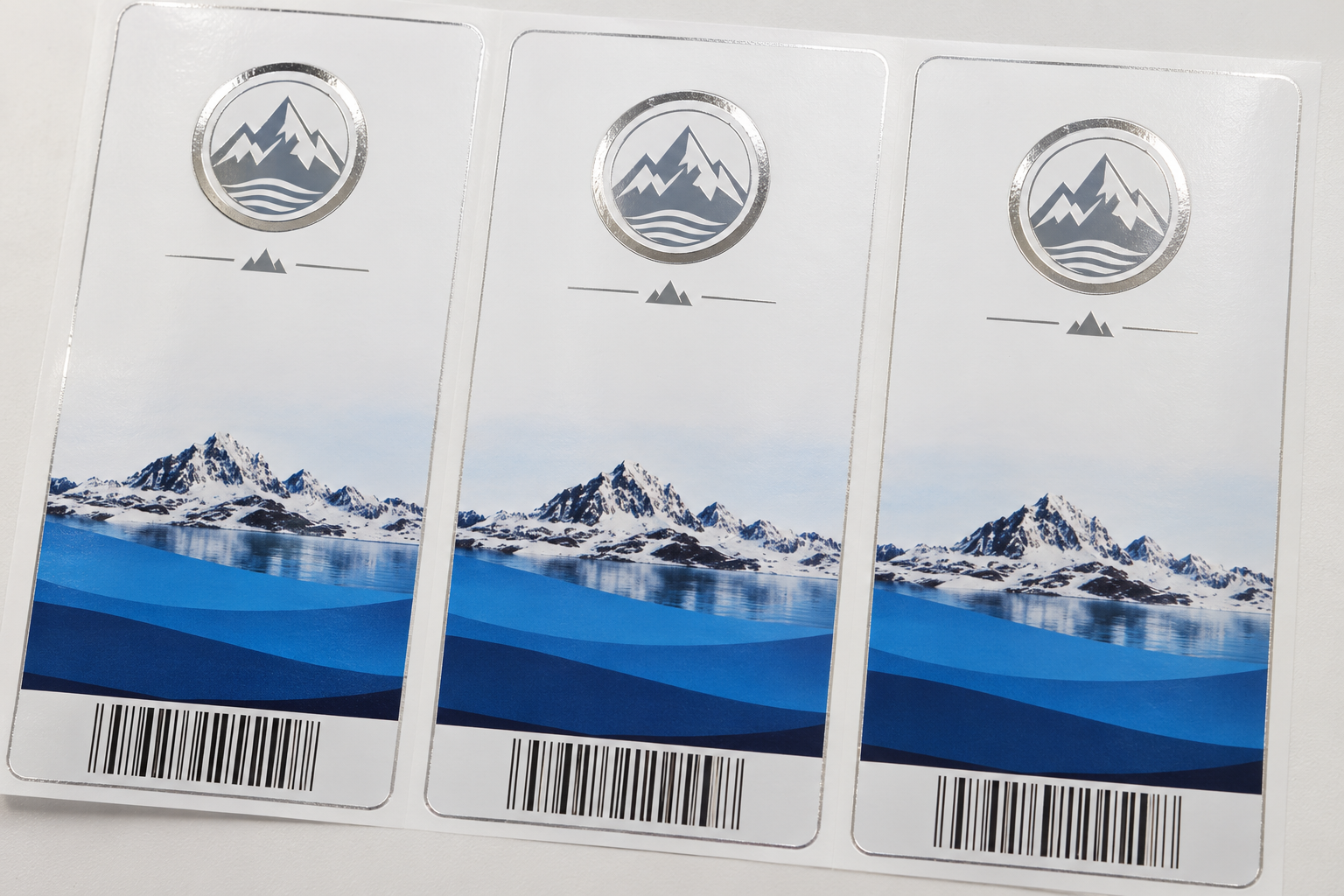
Silver flexo cold foil from the GL FOILS CR1 range adds a bright metallic detail to pressure-sensitive labels produced on compatible narrow-web lines. Use it for a logo, border or selected graphic area rather than covering the entire label. The foil works with a suitable UV cold-foil adhesive; no heated stamping die is needed. Share your finished face stock and artwork so the silver finish can be tested under your actual printing conditions.
A silver accent can give a printed label a clear metallic focal point without turning the whole face stock into a mirror. This page is for converters buying bright silver flexo cold foil for pressure-sensitive labels. It is not a sheet-fed offset foil, hot-stamping foil, holographic pattern or finished label. GL FOILS supplies the transfer foil in rolls; the finished result depends on the adhesive, substrate and press setup.
Start with the actual label construction. A coated paper label, a white PE label and a clear PP label do not receive adhesive in the same way. Send the finished face stock, any coating or primer, and the final print sequence. For PP and PET, suitable surface treatment is important; the CR1 guidance uses at least 38 dyn/cm as a reference for adhesive wetting. Untreated absorbent paper may need a compatible coating. Confirm the match by trial rather than assuming one silver foil will suit every label stock.
| Attribute | CR1 silver flexo cold foil guidance |
|---|---|
| Finish | Bright metallic silver; non-holographic |
| Application method | Inline flexographic cold-foil transfer with compatible UV-curable adhesive; no heated stamping die |
| Label materials | Compatible coated label paper and PE, PP or PET face stocks after surface and adhesive matching |
| PP / PET surface | Suitable corona treatment or primer; 38 dyn/cm is a reference surface-tension threshold for trial |
| Typical flexo speed | 30-150 m/min as a process reference, not a guaranteed production speed |
| Roll format | Typical widths 640 or 1280 mm; custom slitting available. Standard export length about 6000 m; confirm the required roll dimensions |
| Storage | Keep sealed in original packaging at 5-35°C, away from direct sunlight, heat and humidity; use within one year of shipment |
Small silver letters and fine rules can look sharp on a proof but lose definition if the adhesive spreads or the foil does not release cleanly. Send artwork at final label size, including the narrowest line and smallest metallic area. Inspect edge sharpness, missing spots and unwanted foil outside the design after a press trial. A large sample swatch alone cannot approve fine label graphics.
If the design includes a broad silver panel, test that panel as well as the logo. Look for even coverage across the web and at the edges. A setting that transfers a small emblem cleanly may need adjustment for a larger area. Approve the result on the intended face stock after printing and curing, not only on the raw foil roll.
Some label designs print color over silver to create a metallic tint. Tell us whether the silver will be overprinted, varnished, laminated or die-cut. Check the final sequence for ink adhesion, visual color and damage during converting. If you need a rainbow optical effect, request a holographic cold foil separately; ordinary bright silver is not a hologram.
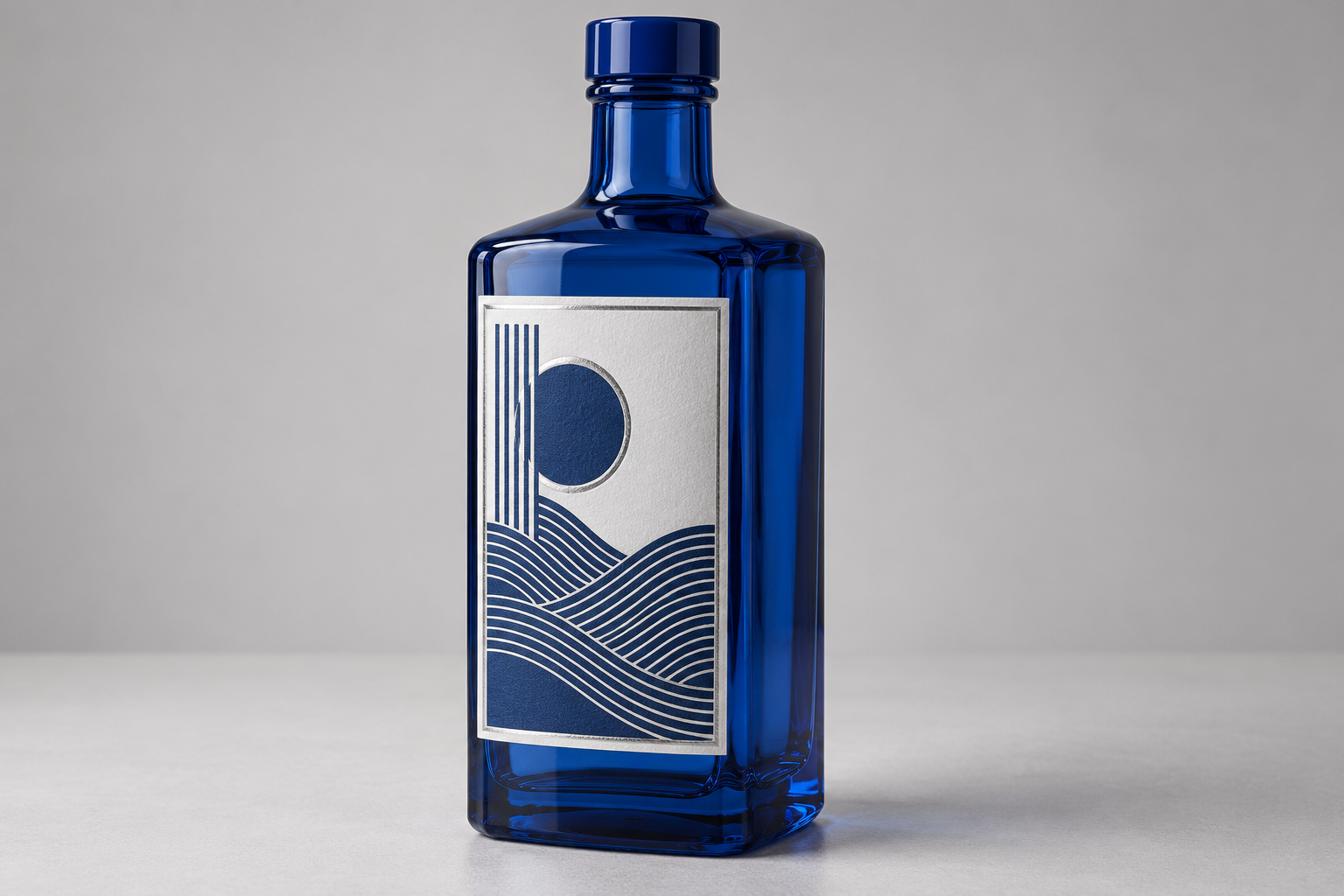
Silver can pick out an emblem or border on a bottle label while leaving the product name and mandatory copy easy to read. Test the finished label material and inspect the foil after application to the container, especially if the bottle is curved or handled when wet. State the expected use conditions rather than assuming a generic abrasion or water-resistance level.
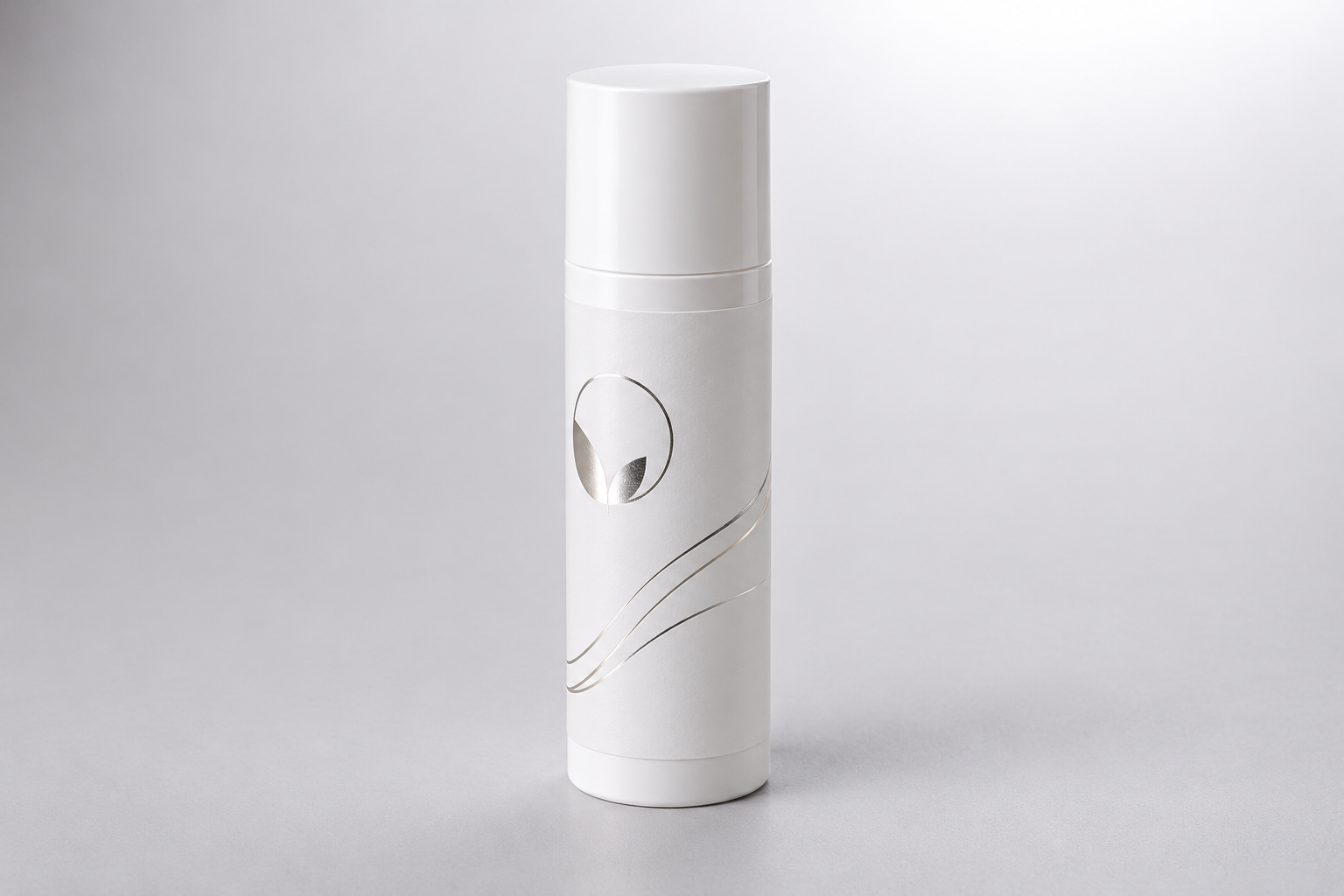
On a skincare or toiletries label, a narrow silver mark can add contrast without overwhelming the printed design. For PE or PP face stock, identify the film and its treatment. Review the appearance under ordinary shelf lighting and check that the label still converts and applies cleanly after the metallic area is added.
A silver frame or small graphic can work on coated paper labels for glass bottles. Send the coated paper specification, intended foil area and final label size. Check the result on the bottle as well as on a flat sheet: curvature and lighting can change how a silver highlight reads.
Include your press type, UV adhesive system, face stock, surface treatment, foil artwork, planned line speed, slit width, roll length and core requirement when requesting a sample or quotation. If the job has both tiny details and a large metallic block, include both in the test artwork. Keep the approved physical label sample and the selected foil reference with the order. Photographs help show an application direction, but they are not a production shade standard.
For a wider choice of metallic colors and substrates, see the CR1 metallic flexo cold foil range. For a color-over-silver design, read our cold-foil overprinting checks. Send GL FOILS your label details for a matched trial recommendation.
No. GL FOILS supplies silver cold foil in rolls for compatible printing lines. The converter applies it to selected parts of the label artwork.
No. This product is selected for an adhesive-and-UV cold-foil process on a compatible narrow-web line. Hot stamping uses a heated die and needs a different foil grade and setup.
Do not assume so. Coating, film treatment and adhesive choice affect transfer. Share each finished face stock and run a trial before approving a production grade.
The CR1 flexo guidance gives a typical 30-150 m/min range. Your stable speed depends on the adhesive, UV curing, artwork coverage, face stock and web tension. It is not a guaranteed throughput figure.
Send the label material, press and adhesive details, foil artwork, expected finishing steps, required roll dimensions, order quantity and a physical silver reference if shade matching matters.
Bright silver cold foil for narrow-web label converters. Add clean metallic accents to beverage, personal-care and other pressure-sensitive labels without a heated stamping die.